October 8, 2026
Advancing Stability Assessments: NAPA at the 21st International Ship Stability Workshop

Organized by the University of A Coruña together with the STAB International Standing Committee, the 21st International Ship Stability Workshop (ISSW) took place this September in Ferrol, Spain. The workshop brought together researchers, naval architects, and stakeholders for three days of technical exchange on stability, flooding, dynamics, and safety of ships. It is a forum where mathematical models, methodologies, or advancements in measurements and testing can be tested and discussed with peers.
A tradition at NAPA
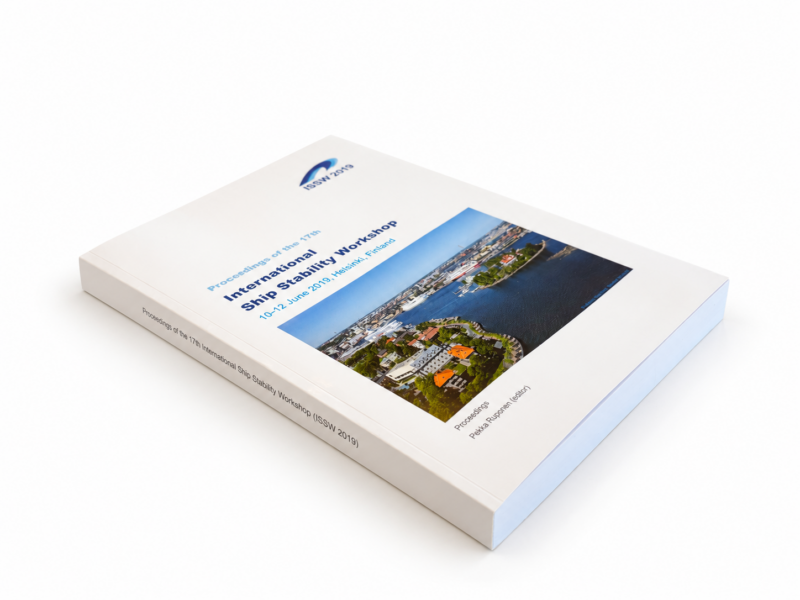
For 20 years now, with a few exceptions, NAPA has participated in these conferences and workshops. And in June 2019, NAPA and Aalto University in Finland together hosted the ISSW in Helsinki, an event the company still remembers with pride.
This year: two Papers, two distinct challenges
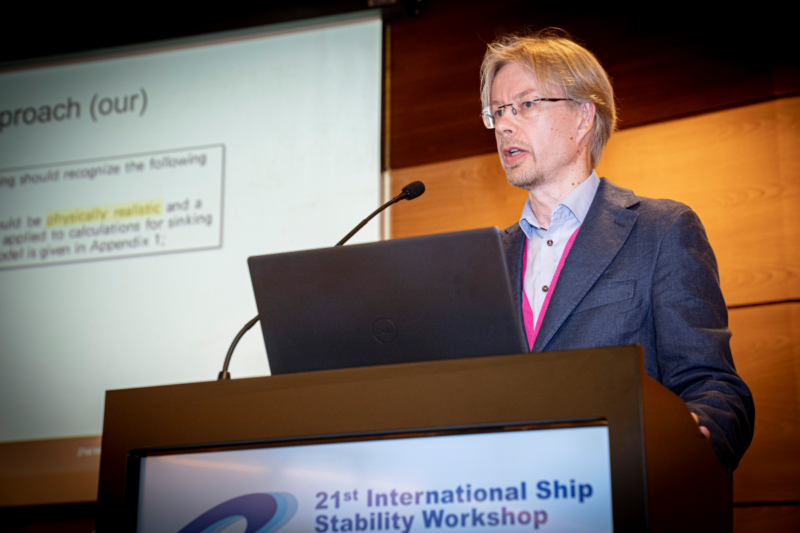
This year in Ferrol, I had the privilege of presenting two papers, each addressing a different challenge in current stability practice. The first one was in the Stability and Safety of Special Vessels session, and the second was in the session for Stability and Safety for Naval Vessels.
1. Sinking assessment for nuclear-powered ships.
Co-authored with Rosa Vilariño and Bright Ahonsi of Core Power, and Pekka Ruponen, Lead Research Engineer in Design Solutions, NAPA, Rosa Vilariño and I presented our paper “On the need to update capsizing and sinking assessment methodologies for nuclear merchant ships”. This paper elaborates on how the sinking could be assessed for nuclear-powered vessels.
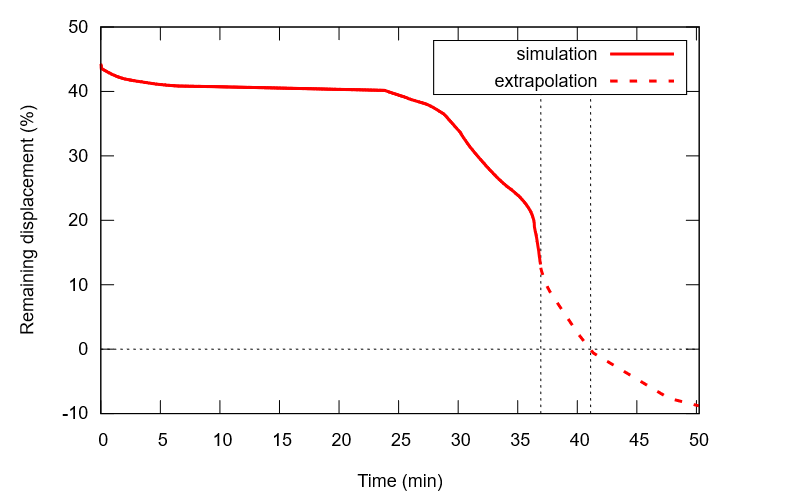
The IMO Nuclear Code, largely unchanged since its introduction in 1981, requires this analysis, but the provided guidance for this process is very thin and predates modern simulation tools by decades. Using time-domain flooding simulation for a case study, the paper outlines a modern path from standard damage stability analysis and ends up with a full sinking timeline, while also discussing where the Nuclear Code itself may need updating to align with current SOLAS practice.
2. Consequence diagram for naval vessels.
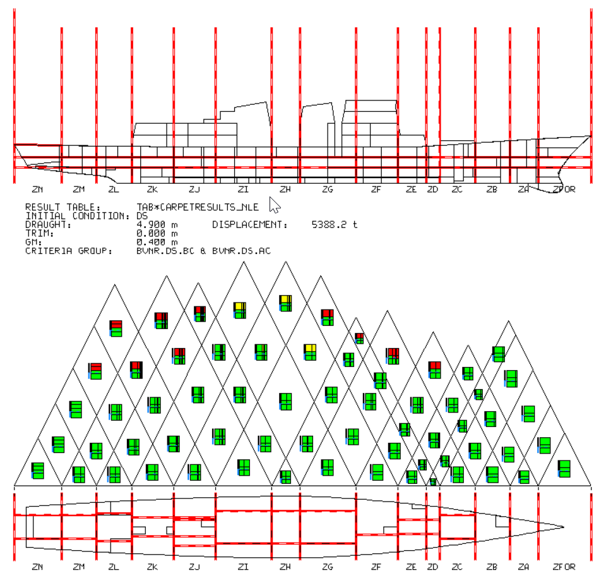
Co-authored with Gaëlle Le Frapper of Naval Group, I presented our paper “Multi-criteria diagram for consequence estimation onboard naval vessels”. This paper examines how consequences of damages could be presented to help in making decisions on naval vessels. Ships have long used visual tools, such as an SFAC diagram intended for commercial vessels, to translate complex calculations into a single quick-read image. Although naval vessels may be facing a different reality than merchant vessels, all ships share a need for quick decision support during flooding incidents. The paper proposes a multi-criteria diagram that adopts the SFAC diagram’s triangle layout and a way for incorporating the criteria naval regulations require, aiming for a tool to support rapid decisions in a damage control center even after a complete power loss onboard. Important to note is that this diagram is not intended to replace more advanced and accurate tools, such as advanced loading computers, emergency computers, or shore-based teams, but to complement them with an alternative solution for redundancy when needed.
What comes next
Two papers, two distinct problems, one shared thread: stability analyses continue to evolve, and NAPA intends to take part in where it happens.
Ship stability, design, and the industry continue to evolve together with research and new discoveries. New energy sources, novel ship designs, and asset concepts will continue to bring new challenges related to safety and regulations long after this year’s papers are closed. NAPA is committed to continuing that research and bringing new findings to the table as the field moves forward.
With enthusiasm, we now look forward to the next STAB&S1) Conference in June 2027 in the USA, and to the new challenges the community will bring to the table there. Thanks again to the local organizers in Ferrol for the splendid arrangements this year.
1) STAB&S Conference: International conference on the Stability and Safety of Ships and Ocean Vehicles