
June 26, 2026
NAPA Release 2026.1 – Focusing for the Future


During the spring 2026, our focus has been on the future. We have now published the first release of this year, containing some of the required upgrades in the software, to prepare for the transformation of ship design.
The NAPA Designer and NAPA Engineer software and documentation have been made ready for the AI era. A new unified look and feel, extended domain functionality, and better connectivity across the platform together build a stronger foundation where AI tools can amplify the potential of the 3D integrated workflow. The first AI tool prototypes have been introduced and can be expected to be published within this year, to boost productivity to new heights with NAPA.
NAPA Release 2026.1 highlights include:
- Redesigned user interfaces
- Latest highlights on modeling and calculations
- New modeling and drawing tools toward detail design
- Performance and robustness for larger, more detailed projects
New User Experience
The new NAPA Designer and NAPA Engineer come with a unified look and feel. The visual upgrades affect the user interface layout of NAPA Designer heavily.
While NAPA Designer continues to provide powerful interactive 3D modeling capabilities, NAPA Engineer introduces a modern design and computing platform built specifically for naval architects. NAPA Designer and NAPA Engineer form a unified experience for the future of ship design.
More flexibility for 3D modeling
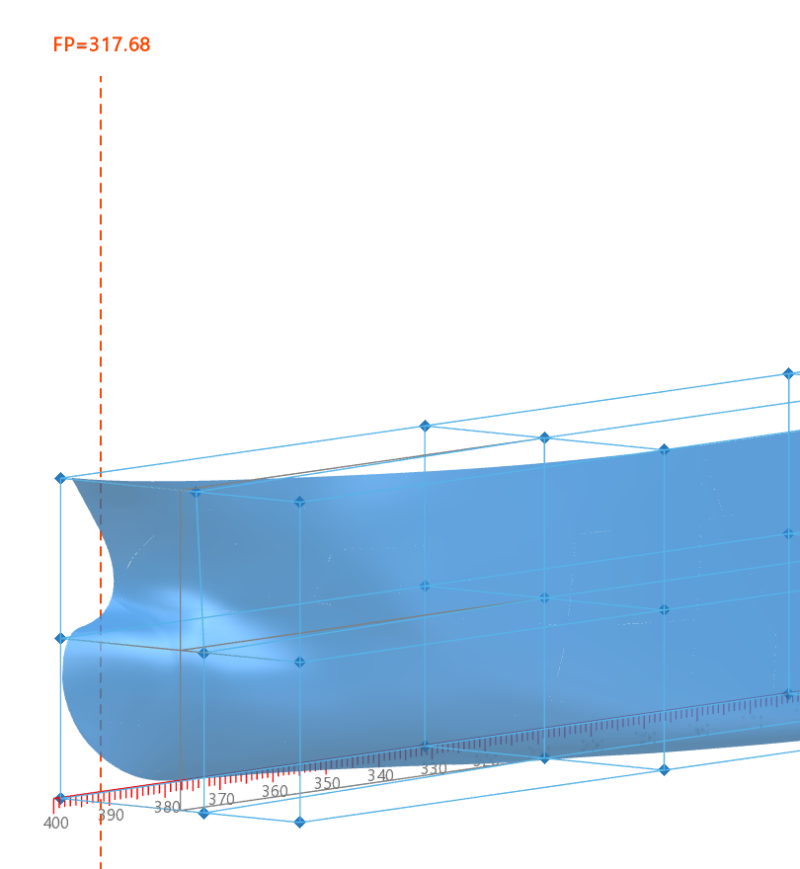
The Free Form Deformation (FFD) enables local and global surface transformations, now available directly on NAPA Designer, also for imported surfaces. FFD lets you modify a specific, user-defined area of a surface by placing a box around the target region. The transformation is applied by moving control points within the box, to reshape that portion of the parent surface, resulting a new surface. FFD does not require a surface defined with a set of curves.
Complete toolset for loading conditions in NAPA Designer
The modern and intuitive loading conditions toolset in NAPA Designer has reached the functionality coverage which supports most of the ship types. A long list of user-requested features, including some must-to-have, has been included in the toolset.
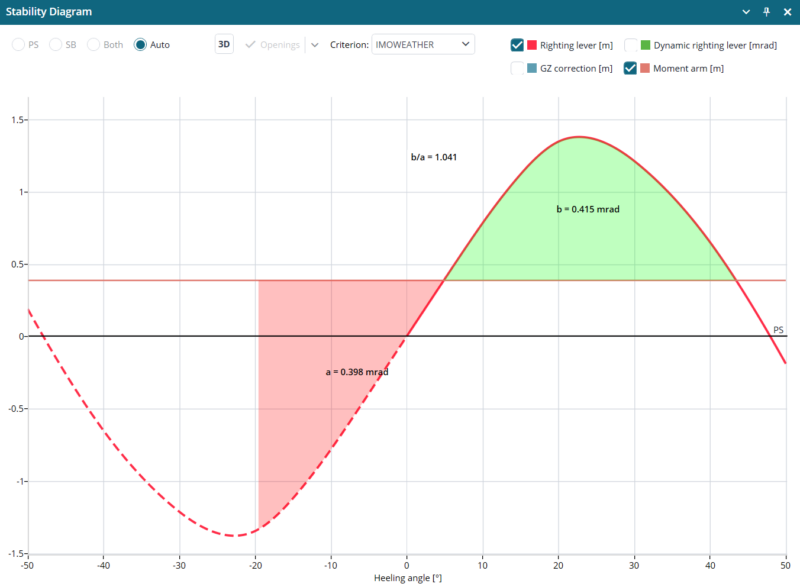
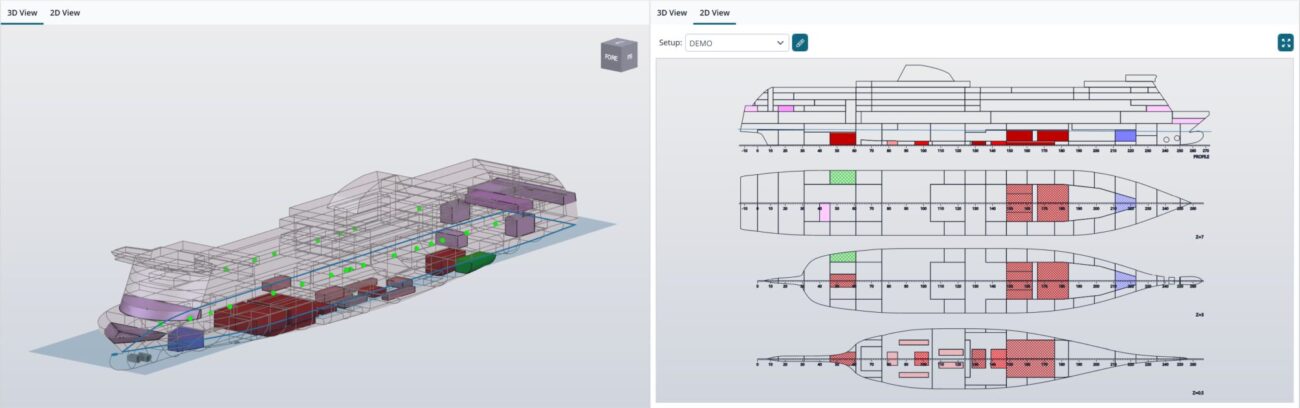
For example, the traditional 2D ship layout complementing the new 3D view, speeds up the loading operations with multi-deck designs, such as cruise vessels and ferries. Graphical rule compliance checks of stability criteria complement the list-format numeric checks.
NAPA Engineer development continues
NAPA Engineer was officially published at the end of 2025, including the renewed toolset for the standard NAPA concepts. The development continues, focusing next on the new customization environment and providing the important domain functionality and user interfaces on the new software platform.
A new customization environment
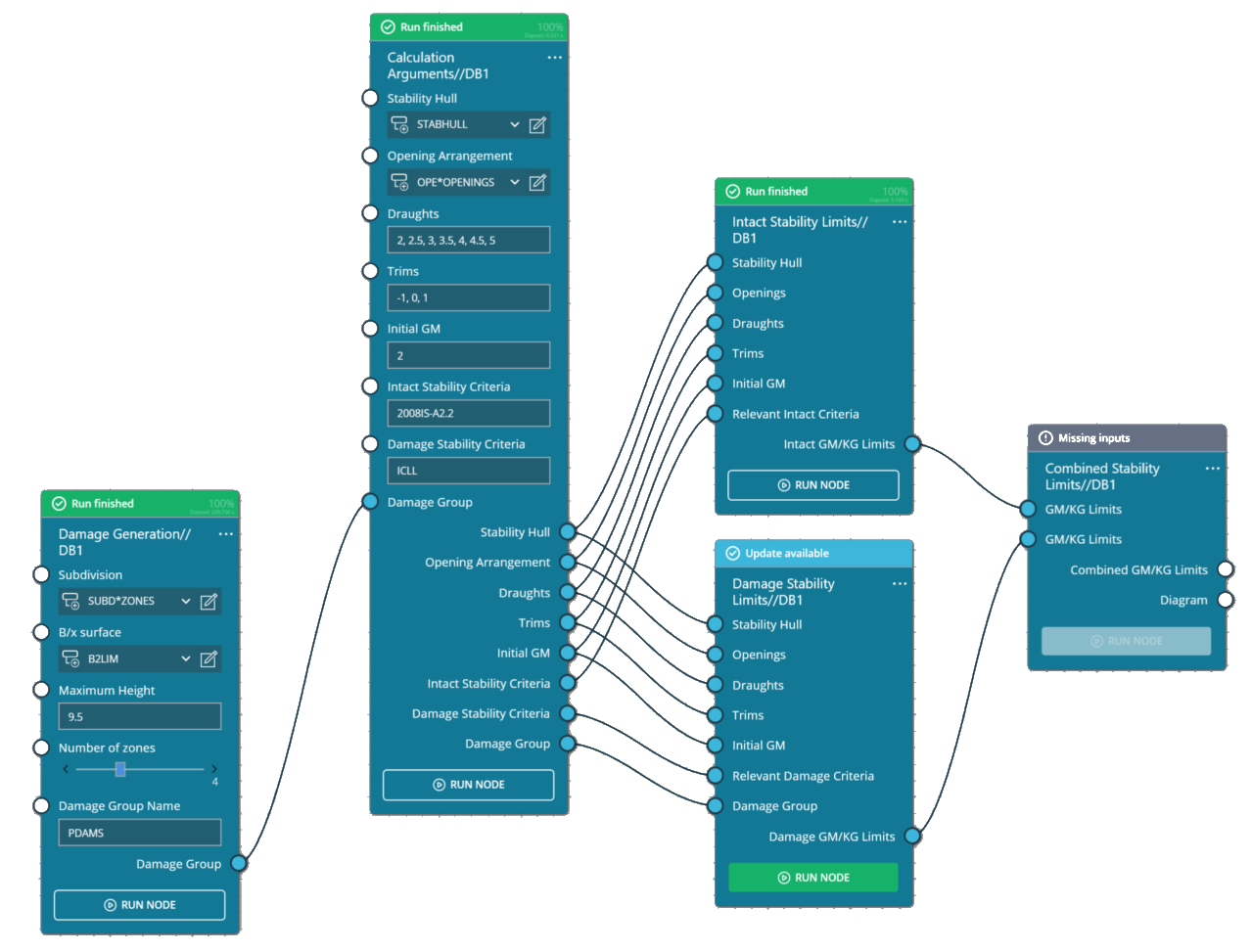
NAPA Node Network in NAPA Engineer has been designed to deliver a powerful visual approach to engineering workflows. As a first step, it represents a straightforward and light user interface for custom NAPA macros, developed and used actively by NAPA user organizations.
The upgraded customization tools in the latest version, such as macro and node editors, help to build a light user interface with the Node Network, for new and existing macros.
Note: The Node Network is currently available as a trial feature while we continue developing the concept to meet the high industry standards.
Seamlessly extending the 3D workflow, NAPA Steel
This release continues to extend the 3D structural design workflow toward detail design readiness. Through co-development with shipyards, this release brings new modeling and drawing tools, improved robustness for large multi-user projects, and plate thickness handling for production-ready geometry.
Greater control over structural details
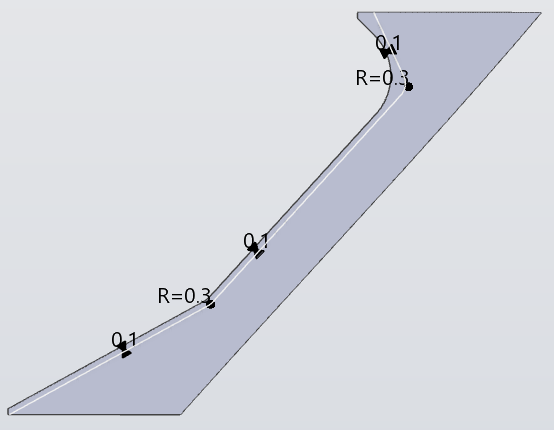
New tools give designers more control over details of stiffeners, seams and brackets.
Stiffeners can now be defined with multiple offsets and radius in a single step, with easier control over their end positions. Brackets gain a new offset option at T-bar intersections, reducing the need for manual geometry adjustments. Corrosion addition values for plates and stiffeners are now part of the model and exported through the OCX interface.
In NAPA Drafting, a renewed shell expansion algorithm resolves the long-standing issue of spikes appearing in complex hull areas.
Larger, more detailed projects with confidence
Over the past three releases, NAPA has delivered sustained performance improvements across multiple areas: faster project opening, more responsive geometry drawing, smoother visualization of stiffener holes and clipping cube interactions, and the ability to generate Steel sections for visible objects only. So you no longer wait on the whole model when working on a specific zone.
- Model Check tool can now detect overlaps between main structural objects, brackets and stiffeners, catching issues before downstream export.
- Copy Content tool now lets you transfer selected Steel parts with all their references directly from the model hierarchy to a new database, enabling efficient project reuse across sister vessel projects.
- Assignments tool for multi-user operation now offers greater control with a new administration mode, keeping large-team workflows organized.
Accurate geometry for production
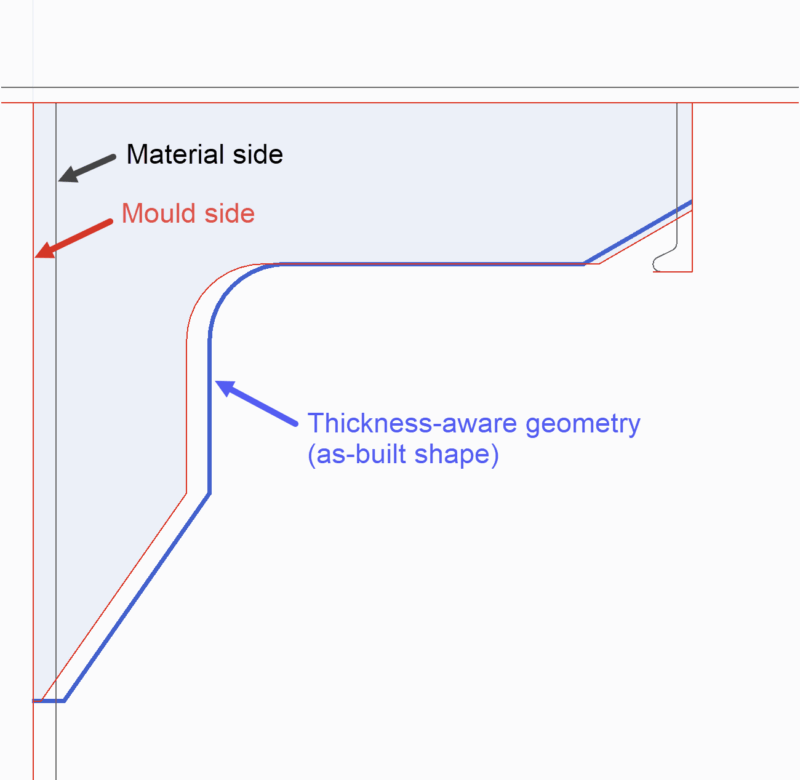
A reliable 3D model handover to production design systems requires that geometry reflects real plate thickness — not just the mould line.
This release introduces foundational capabilities to adjust the shape and position of structural objects based on plate thickness, including cumulative offset effects across connected objects. Brackets, openings, boundary stiffeners, and intersecting boundaries are now all correctly adjusted, producing geometry that closely represents the as-built solid model.
These capabilities are also accessible through the NAPA API, enabling integrated thickness-aware workflows. The approach is currently being piloted together with Chantiers de l’Atlantique.
Security and Compliance
NAPA Release 2026.1 introduces two Beta features, aimed at enterprise information security and compliance needs. A new Audit Log facility captures key project lifecycle events, such as project accesses, and Microsoft Entra ID single sign-on enables silent authentication at startup across all NAPA applications, more securely, without a separate login dialog.
In addition to the highlighted new development, the new NAPA Release includes numerous user-requested improvements in geometry modeling, stability analysis, and structural design. All new functionalities, updates, and changes in the software are included in the NAPA Release Notes 2026.1 document, available on NAPAnet, with the installation media.
Many of the topics in this release were presented at the NAPA User Meeting 2026 — Transforming the Future of Ship Design. Click here to download materials. (Log in to NAPAnet is required to access)