October 27, 2026
Paper is the safety risk shipping does not talk about
At SMM 2026, Esa Henttinen, Executive Vice President, Safety Solutions, NAPA, joined TradeWinds TV to talk about paper-based processes, the pressure on crews, the return on digital beyond fuel, and where AI fits in maritime safety.
Ships do not lack systems or data. Yet the human element is involved in most investigated accidents in European waters. In the TradeWinds SMM TV studio in Hamburg, TradeWinds journalist Jade du Preez asked Esa Henttinen where that gap comes from and what owners should invest in to close it.
His answer starts on paper. Most onboard procedures still live on paper forms, or on screen copies of paper forms. That leaves crews to carry every step in their heads, at a time when new fuels, new ship types, and new rules keep adding more to remember.
Ships do not need more systems. They need simpler processes.
Esa Henttinen, EVP, Safety Solutions, NAPA
NAPA EVP Esa Henttinen’s Interview on TradeWinds TV at SMM 2026: why paper is the safety risk, the return beyond fuel, and why AI needs clean data first.
The text below contains edited excerpts of the interview.
Digitizing is not digitalizing
Q: NAPA has launched a new product, NAPA Checklist. What problem does it solve?
Esa: The problem we are solving is one the industry does not discuss enough: paper-based processes. Over the last ten years, the human element was involved in nearly eight out of ten investigated accidents in European waters.
When investigators dig deeper, it often comes back to the process itself. Tasks are overlooked, done in the wrong order, or signed off before the work is really finished. That happens because most of this work is still handled on paper.
Some processes have been digitized, but often that just means putting paper or a PDF on a screen. It still doesn’t ensure things are done in the right order. So we see a difference between digitizing and digitalizing. Our approach is to digitalize: to improve the process itself, and make it faster, easier, and more intuitive for the crew on board. That is how you reduce the room for human error.
Cognitive overload, and why safety sits underneath everything else
Q: What is the biggest pressure on crews right now? And if you had money to invest yourself, what technology would you prioritize to ease it?
Esa: It is easy to blame this on human error. But look at how crews are operating ships today. They carry a huge cognitive load: new ship types, new fuels, new technologies, new regulations. So much is new that there is not enough time to train crews on all of it.
That is an overload situation. It can lead to an incident, or to a person missing something they were supposed to do, without even noticing that a step was skipped.
So I would invest in making onboard processes paperless and automated, and in reducing the administrative burden on the crew.
Today, that investment often competes with cutting emissions and autonomous shipping. But safety is not a third, separate track. It sits underneath both. New fuels such as ammonia and methanol increase the need for safety measures and bring more regulation for the crew. Autonomous ships require more safety-related procedures, not fewer. These things go hand in hand.
The return on digital beyond fuel
Q: Owners tend to measure digital ROI mostly in fuel savings. How should they think about return beyond fuel?
Esa: Fuel savings are probably the easiest to measure. But digital brings other returns.
First, safety: how many incidents or accidents you have prevented.
Second, operational efficiency: fewer remarks from Port State Control, and time on board spent navigating the ship rather than filling in paper. One real example is our customer Anthony Veder, a gas carrier operator. They saved about 2,000 hours per ship per year just by moving from paper record-keeping to an electronic logbook. That is a significant saving from a digital workflow.
Third, it works like insurance for your vessel. If you operate smart, you are less likely to end up in a bad situation.
Owners who invest only in fuel efficiency often overlook these safety-related returns.
A simple test to measure success is to ask how many times one person types in the same information. Ideally, only once.”
Esa Henttinen, EVP, Safety Solutions, NAPA
Shipping does not lack data. It lacks data hygiene
Q: You have said shipping’s problem is never a lack of data. What do you mean by that?
Esa: There has always been a lot of data in shipping and on board ships. What is missing is data hygiene. Information sits in many different systems, as point solutions, and is never brought together. It needs to be collected, connected, and contextualized. Only then can it be used further.
The industry also often stops at digitizing and does not go on to digitalizing. You put the paper on the screen, but people still type the same information into several systems. One way to measure success is to ask how many times one person types in the same information. Ideally, only once.
With the NAPA Checklist, when the crew enters information, it flows automatically into the NAPA Logbook as the record-keeping platform, then into NAPA Fleet Intelligence, where shore colleagues see the same information. That single entry is then automatically ready for Port State Control and reporting. That should be the aim.
AI needs structured data before it can help
Q: Where does AI fit? Will it be the transformative technology for maritime over the next five years?
Esa: AI is definitely going to be a big thing, but probably not the only thing. To use AI, your data needs to be structured and contextualized. After that, you can build tools that help the crew and officers on board.
Take cargo planning. With our customer Stena Line, we redesigned cargo planning on their RoRo ships by digitalizing the process. Planning that used to take an officer 1 to 1.5 hours now takes 10 to 15 minutes. That gain comes from digitalizing the workflow. On top of that, we are now trialing machine learning to place dangerous goods on board in line with the IMDG Code.
Another example is the AI dashboard for NAPA Permit to Work. Shore teams can see patterns in permit activity across the fleet, for example, comparing how sister vessels handle their work, and spot where something is missing.
Simpler processes, not more systems
Q: If the audience takes one thing from this interview, what should it be?
Esa: We do not need more systems on board. We already have enough systems and solutions on the bridge. What we need is simpler, more user-friendly processes, and that means looking at the safety management system itself.
The goal is to reduce accidents on board. If we make the process digital, faster, and easier for the people who use it, the industry will be safer.
Record data once. Use it everywhere.
NAPA Checklist, NAPA Logbook, NAPA Permit to Work, NAPA Stability, and NAPA Fleet Intelligence work as one connected safety suite.
Crews record the work once, as it happens, and shore teams see the same data across the fleet. Talk to our experts about where your fleet could start.
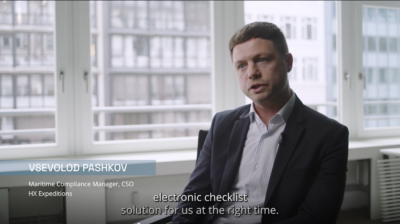
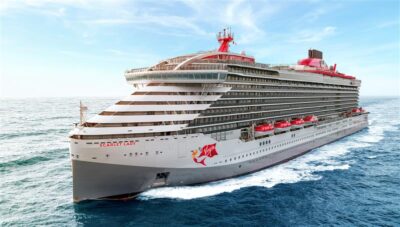
From our customers
Learn how NAPA’s solutions enhances ship safety and operational efficiency for leading passenger and merchant vessel fleets.
Want to know more?
Contact our experts to learn how NAPA can help, or read more about our digital solutions.