June 17, 2026
How signal data is changing vessel performance for dry bulk shipping


Dry bulk shipping is heading into one of its most competitive stretches in years. Over 600 vessels are scheduled for delivery in 2026 – the heaviest wave of new tonnage in more than a decade (Seatrade Maritime), and freight markets already saw a 10% downturn in 2025 as supply outpaced demand. For ship owners, tightening margins leave little room for inefficiency.
Add to this intensifying regulatory pressures. EU ETS surcharges now represent up to 12% of total shipping costs in 2026, 2025 was the first year with FuelEU Maritime, and CII ratings are increasingly influencing which vessels charterers want on their books.
In this environment, vessel performance is no longer a technical concern that lives with the superintendent. It is a commercial variable with a direct link to the bottom line.
The noon report has served the industry well, but it has limits
The noon report is one of maritime’s oldest routines. Every day at noon, crew members manually compile a summary of speed, fuel consumption, position, and weather. For voyage reporting, regulatory submissions, and building a consistent performance record, it remains a well-understood process. Many owners have invested years in establishing noon reporting workflows, and that foundation has real value.
But noon data has limits that signal data is well-positioned to address. One data point every 24 hours means a vessel can develop a fouling problem or show early signs of underperformance for days, sometimes weeks, before any meaningful actionable insights reaches the office ashore. And because every report passes through human hands, data quality can vary, which is why noon and signal data work best together, with signal data providing continuous verification and additional resolution where noon alone falls short.
Speed and consumption clauses remain a primary source of charter party disputes, and data quality is widely acknowledged as one of the biggest challenges, with trust and consistency issues arising even when the data appears to be correct.
What changes with signal data
High-frequency signal data, streamed directly from vessel sensors and systems, builds on the noon report by filling in what happens between submissions. Rather than one summary at noon, operators receive continuous readings from sensors, engine load, shaft power, fuel flow, speed over ground, updated in near real-time throughout the voyage.
The practical difference is significant. A fouling event that might go undetected for weeks in a noon-data environment can be identified within days. Performance deviations can be caught and addressed before they escalate into charter party disputes. And this same performance data feeds directly into CII, FuelEU Maritime, and EU ETS compliance workflows, connecting operational insight to regulatory reporting in a single process rather than two separate ones.
Data alone is not an insight
It’s worth remembering that raw signal data on its own is just a stream of numbers. Thousands of sensor readings tell you what is happening, they do not tell you what it means, or what to do about it.
NAPA Performance Models transform raw data into meaningful insights by providing a physics-based reference point for each individual vessel. These are not black-box AI systems, they are transparent, naval architecture-rooted models built on over 35 years of domain expertise. With over 90% of new vessels built by NAPA customers, there is a depth of domain knowledge built into every NAPA Performance Model.
By separating the effects of weather and currents from true vessel performance, these models answer questions noon data cannot as reliably and in timely manner answer to: Is this vessel performing to its design potential? Has hull fouling crossed the threshold where cleaning delivers real ROI? Is there a developing issue that warrants action now?
Where it makes a difference in practice:
- Hull fouling detection: Moderate fouling can increase fuel consumption and emissions by 20-30% . Signal data enables owners to identify precisely when degradation is accelerating, so cleaning decisions are timed for commercial impact, not based on fixed schedules or rough estimates.
- Early detection before charter party disputes: With continuous data, performance deviations can be spotted and investigated before they become a formal CP issue, shifting the dynamic from reactive to proactive.
- Connected performance and compliance reporting: CII ratings directly influence chartering decisions and are increasingly becoming a factor in vessel’s charter terms. Because performance monitoring and compliance reporting run through the same data pipeline, there is no reconciliation step between what the vessel is doing and what gets reported.
- Measurable impact on carbon costs: With EU ETS costs projected between €60-€150 per tonne in 2026, accurate performance monitoring has a measurable impact on carbon costs, enabling targeted action rather than across-the-board speed reductions.
No disruption to existing workflows
NAPA Fleet Intelligence supports both noon and signal data within the same platform. Owners can bring in signal data alongside existing noon reporting, building confidence in the combined picture without abandoning the workflows already in place.
The direction of travel is clear. High-frequency data, interpreted through physics-based vessel models and connected to compliance reporting, is what enables owners to move from reactive to proactive, catching issues earlier, deciding faster, and building a more credible performance record across the fleet.
Want to explore what signal-based performance monitoring could mean for your fleet? Get in touch with our team.
See how signal data works across your fleet in practice
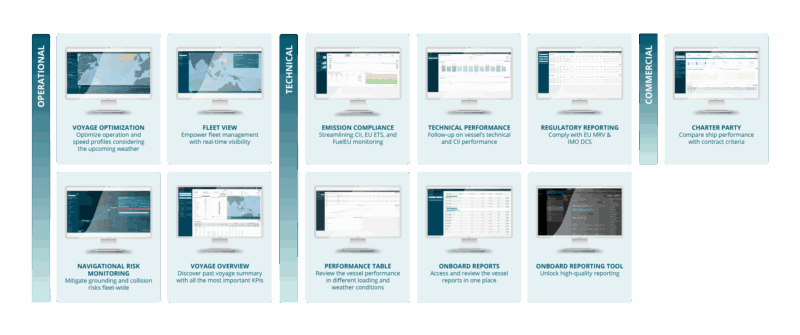
Understanding the value of continuous performance monitoring is one thing. Seeing it work on your vessels is another. With physics-based performance models and signal data connected in a single platform, owners can move from reactive to proactive: catching issues earlier, cutting compliance costs, and building a performance record that holds up commercially.
Explore:
- How to detect hull fouling before it impacts fuel costs and your CII rating
- How to connect vessel performance monitoring with EU ETS, FuelEU Maritime, and CII reporting in one workflow
- How to build a data-backed performance record that protects you in charter party disputes