
COMING SOON
NAPA Operational Simulation
Know how your design performs at sea,
before it ever leaves the shipyard.
Simulate real voyages. Design better ships.
Design decisions shape a vessel’s operational performance for decades. NAPA Operational Simulation gives naval architects the evidence to make them with confidence by combining real trade routes, hindcast weather, and full hydrodynamic calculations to evaluate fuel consumption, CII rating, and ESD performance at the design stage.
Key benefits
Design with operational confidence
Compare hull alternatives, ESDs, and propulsion configurations on the specific routes the vessel will operate, with results ready to present to owners from day one.

Built on the tools operators already trust
OpSim shares its backend with NAPA Voyage Optimisation, used daily by operators and crews worldwide. Simulation results that hold up against in-service data.

Integrated into
NAPA design software
Performance models flow directly from your existing NAPA hydrodynamic calculations.
Start simulating on real routes within the same environment where design work is already happening.
How it works
1
The performance model is built directly from the designer’s existing NAPA data — hull form, resistance, propulsion, engine, seakeeping, and manoeuvring. No re-entry, no parallel tool chain.
2
Model ship routes by defining routes or use common routes based AIS data.
3
Study the actual weather condition, waves, winds, currents with the selected route; reflecting realistic operations.
4
Results include fuel consumption, CII rating, EEDI, downtime on route, maximum motions, and wave bending moment. Design variations, ESD configurations, and wind-assisted propulsion systems can be compared directly under identical conditions.
SIMULATION OUTPUTS
Operational simulation turns design decisions into measurable results.
See more
Close
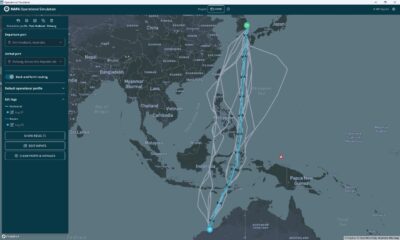
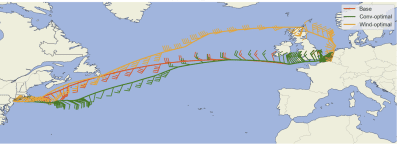
The simulation modelled a Japan Bulk Carrier on the Port Hedland–Pohang route across 11 voyages over five months (January–May 2026), comparing four configurations under identical conditions.
- Vessel: Japan Bulk Carrier
- Route: Port Hedland, Australia — Pohang, South Korea
- Simulation period: January–May 2026 | 11 voyages
8.0%
FUEL SAVING
| Configuration | Fuel saved v. basedline |
| Optimised routing alone | 1.6% |
| Sail propulsion alone | 6.6% |
| Sail + optimised routing | 8.0% |
Results vary by vessel type, route, and configuration.
NAPA Operation Simulation quantifies that variation so designers can act on it.
The following outputs are from a NAPA-conducted simulation presented at NAPA User Meeting 2026. Talk to our expert to learn more!
See more
Close
Which propulsion choice and routing strategy works best for your vessel?
OpSim tells you.
- Four configurations tested under identical real-weather conditions.
- Same route, same time period. Results are directly comparable.
- Propulsion choice and routing strategy evaluated together.
- Every finding available before any hardware decision is made.

Design with foresight
The regulations are here, the financial stakes are real,
and the decisions that define a vessel’s lifetime operating cost must be validated
at the design stage, not revisited after it.
Learn more about NAPA Operational Simulation

Relevant Solutions

Talk to our experts.
Fill in the form and we will be happy to respond to your questions and introduce our offering in more detail.
By submitting the form, I consent my information to be used according to NAPA’s privacy policy.