December 9, 2025
Collaboration driving innovation in the Japanese maritime industry
Japan’s maritime industry faces new challenges and evolving requirements. At NAPA User Seminar Japan 2025, over 150 industry professionals came together in Kobe to tackle the challenges of decarbonization, digitalization, and next-generation ship design. From rapidly evolving use cases of digital twins to the promise of AI-driven workflows, this year’s event revealed how collaboration is shaping the future of shipbuilding.
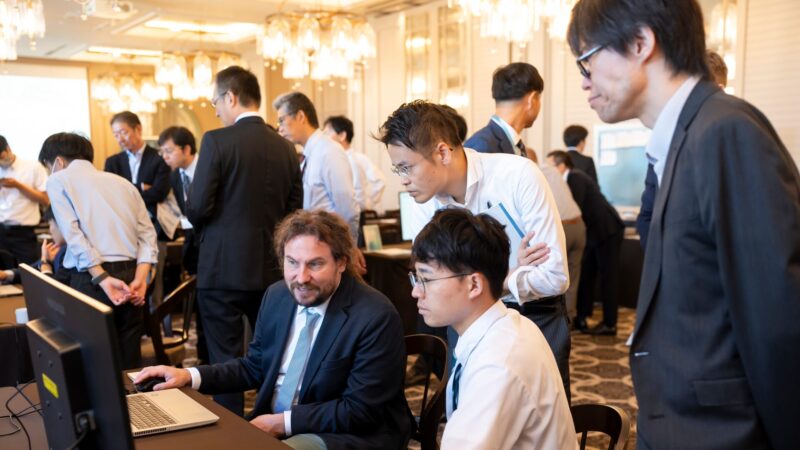
In October 2025, the NAPA User Seminar Japan brought together key players from the Japanese maritime industry in Kobe for a unique industry-wide dialogue. The annual event, growing every year, hosted a record number of participants from across the Japanese shipbuilding ecosystem. Over 150 industry professionals, representing shipyards, classification societies, engineering companies, ship owners and academia, came together under one roof, delivering a one-of-a-kind opportunity to explore the event’s theme: Shaping the Future of Ship Design.
The NAPA User Seminar provides a unique forum for open dialogue at a time when the industry faces mounting requirements and new challenges. From decarbonization targets and evolving regulatory frameworks to adopting digital technologies and AI, ship design is becoming increasingly complex, adding new layers to traditional workflows. Meeting these demands requires more than advanced tools – it calls for collaboration across the entire value chain.
This is why building the future of ship design requires bringing the industry together. Crossing competitive boundaries to meet other experts does not only provide inspiration, but also gives our customers and us a competitive advantage by sharing practical use-cases and insights.
Throughout the seminar, we had the pleasure to hear from the leading Japanese maritime industry stakeholders, such as ClassNK, Nihon Shipyard, Tsuneishi Shipbuilding, Oshima Shipbuilding and Higaki Shipbuilding, on their experiences with NAPA.
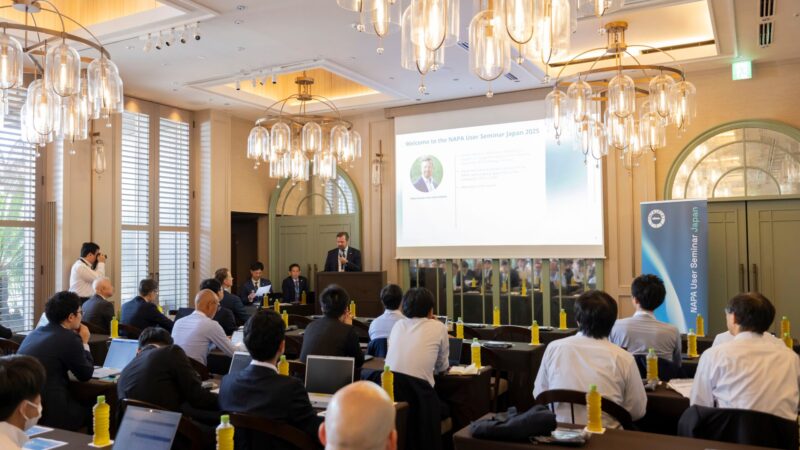
Unlocking smarter ship design: What we learned at NAPA User Seminar Japan
This year’s NAPA User Seminar Japan shared a clear message: the future of ship design demands bold innovation and deep collaboration. Shipbuilders face mounting pressure from decarbonization targets, stricter regulations, and the need to integrate advanced technologies—all while navigating demographic shifts and global market competition. We heard several insightful keynote speeches and presentations, demonstrating how innovation and partnership can transform ship design.
Digital Twins: Connecting design and operations
Digital twin use cases are evolving rapidly in Japan, and their potential was a central topic at the seminar. Toshihisa Cho from ClassNK highlighted in his keynote the Shared Digital Twin initiative, which connects design and operational data to create multiple use cases that utilize cross-industry collaboration and a data sharing framework, that unlock new value from design data for life-cycle asset management purposes.

This approach enables seamless workflows, reduces inconsistencies, and fosters secure data sharing between shipyards, shipowners, and engineering offices. By bridging the gap between design and real-world performance, digital twins promise smarter decisions on safety, efficiency, and sustainability.
Innovation through 3D models
Several presentations showcased how 3D modeling is reshaping ship design. Takashi Yamamoto, Yuki Ishiguro and Motoki Kawagoe from Usuki Shipyard shared their journey of integrating NAPA and 3D CAD to build a more practical and flexible design environment, while Robertus Bimo Sukoco from Taigai Designing Office demonstrated how moving from 2D to 3D unlocks faster iterations and improved accuracy.
New technologies: Generative AI and automation
The seminar also explored cutting-edge technologies that will define the next era of ship design. Professor Yasuo Ichinose from OCEANS, The University of Osaka, presented research on generative AI for design support systems, showing how AI can automate complex calculations, assist in creating design variations, and speed up decision-making.
Clarity to complexity: an integrated approach to ship design
Clarity in ship design is becoming essential as complexity grows with new regulations and advanced technologies. How can the industry turn this complexity into clarity? Jan Furustam, Director of Business Development at NAPA, presented how NAPA addresses these multidisciplinary challenges of ship design with an integrated design approach.

He showcased how NAPA Engineer brings NAPA’s philosophy of one single 3D model to a new level by harnessing the latest technologies and principles for a great user experience. NAPA Engineer’s Node Network approach uses a low-code, visual method to simplify complex design and data workflows, showing clear dependency mapping between disciplines. This approach gives naval architects a holistic view of complex challenges, turning overwhelming processes into intuitive, visual workflows.
Looking ahead: The future of ship design in Japan
The discussions at NAPA User Seminar Japan 2025 made one thing clear: the future of ship design will be shaped by collaboration and technology working hand in hand. From generative AI and shared digital twins to integrated 3D workflows, Japan’s maritime industry is embracing innovation to meet decarbonization goals, regulatory demands, and operational challenges.
But progress isn’t only about adopting new tools—it’s also about bridging gaps across generations and organizations as Japan’s shipbuilding sector faces demographic shifts, global market pressures, and the complexities of the energy transition. These forces create a competitive environment where smaller and mid-sized shipyards, in particular, need fresh talent, new ideas, and modern processes to thrive.
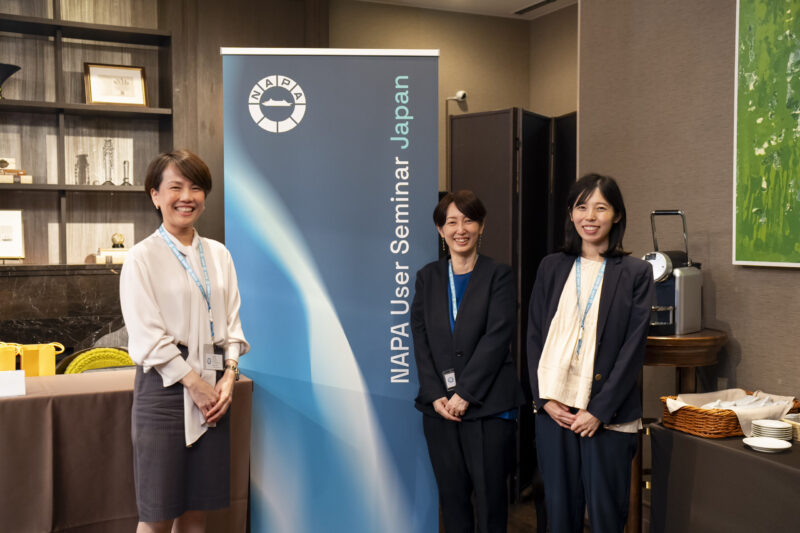
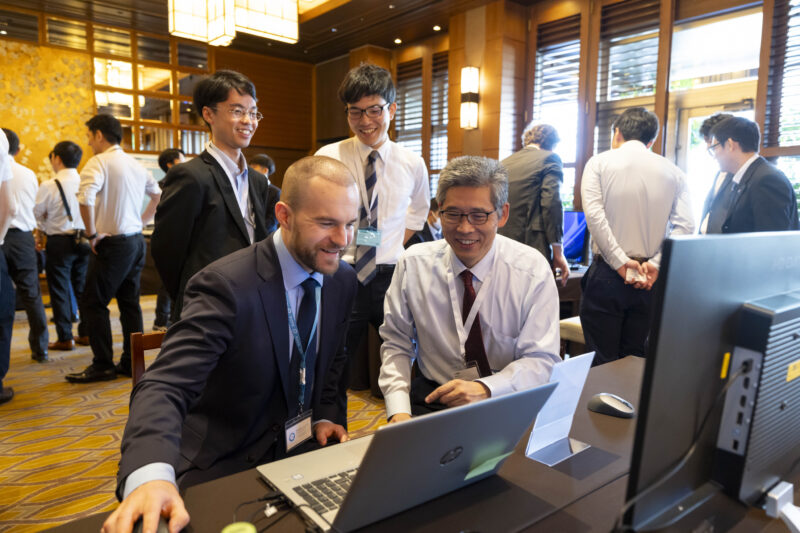
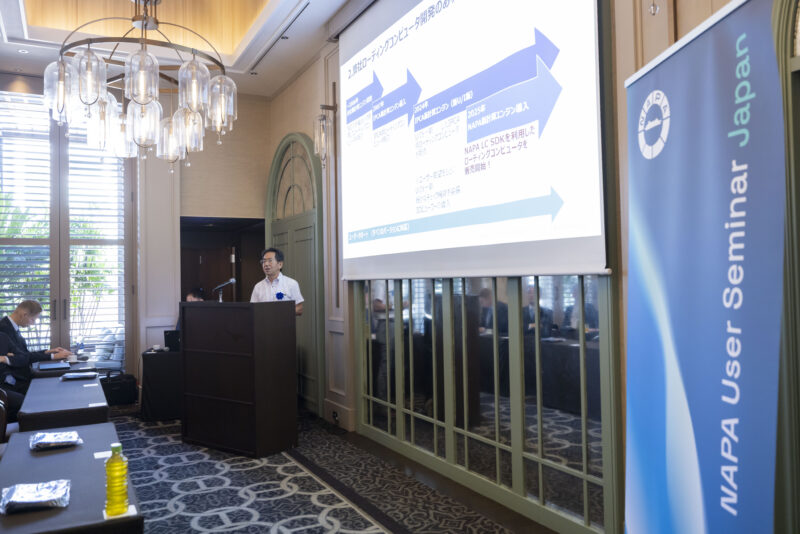

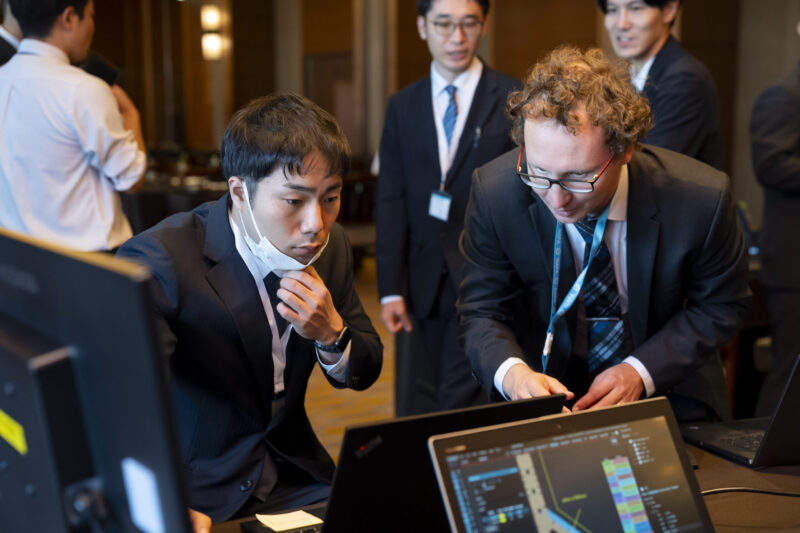
The seminar’s collaborative spirit offers exactly that. One of the most valuable aspects of this year’s event was the dialogue between shipowners, shipyards, and engineering offices. These conversations enable stakeholders to align on shipowner needs, improve design processes, and advance initiatives such as the development of digital twins and early future proofing of next generation fleets with Operational Simulation of emission footprint in the concept design phases—creating a more integrated and efficient approach to shipbuilding.
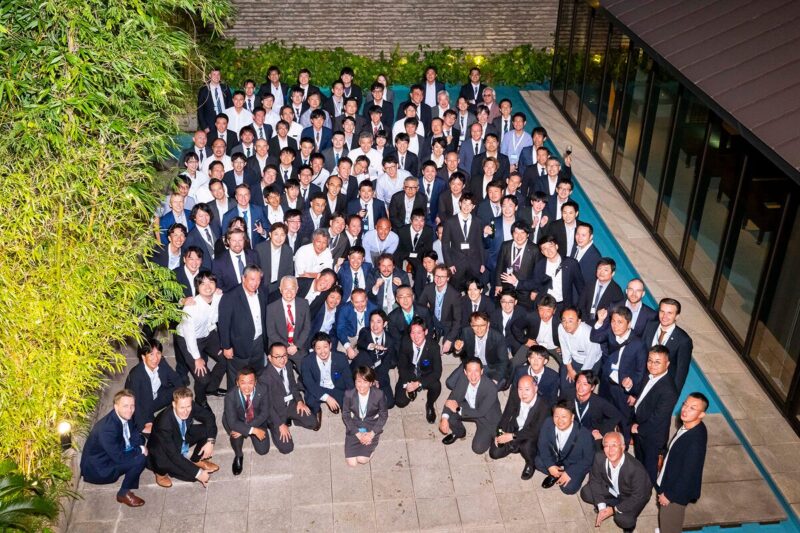
This seminar allows us to freely exchange opinions with people in the maritime industry. It’s always stimulating and provides insights into the latest industry trends and future initiatives.
By fostering these connections and embracing new ways of working, the seminar helps ensure that Japan remains at the forefront of global shipbuilding. At NAPA, we are committed to supporting this evolution by providing tools and platforms that enable collaboration, streamline workflows, and unlock new possibilities for efficiency and sustainability. Together, we are shaping a future where ship design is not only more advanced but also more connected.